


WASHINGTON—Today, the U.S. Department of the Treasury took coordinated action to further disrupt the Prince Group Transnational Criminal Organization (Prince Group TCO). The Department of the Treasury’s Office of Foreign Assets Control (OFAC) sanctioned nine individuals and 26 entities linked to Prince Group TCO, including TCO leadership, investors in scam compounds, and front companies. In parallel, Treasury’s Financial Crimes Enforcement Network (FinCEN) proposed amending its October 2025 Huione Group Final Rule to include H-Pay Service PLC and any successor entity. Huione Group served as a critical node for laundering proceeds of cyber heists and virtual currency investment scams and was used by the Prince Group to transfer and consolidate scam-derived assets.
“Scam centers in Southeast Asia steal billions of dollars from American victims each year,” said Secretary of the Treasury Scott Bessent. “The Trump Administration is united in its efforts to dismantle these overseas criminal enterprises, and Treasury will continue using its tools to disrupt the networks behind this egregious fraud and protect Americans.”
Together, today’s actions build on Treasury’s October 2025 designation of Prince Group TCO and guard against Huione Group’s attempts to circumvent being cut off from the U.S. financial system.
On October 14, 2025, OFAC, in coordination with the United Kingdom’s (UK) Foreign, Commonwealth and Development Office, designated Prince Group as a TCO for its role in a global criminal enterprise built on scam compounds, fraud, and money laundering. Prince Group TCO members own and reap substantial profits from scam compounds where fraud operations target victims in the United States and around the world. Prior to its designation, Prince Group TCO oversaw a worldwide money laundering network and invested criminal proceeds across a wide range of businesses, including real estate, aviation, and luxury cigars. Following Treasury’s action, countries around the world mobilized against this vicious syndicate, seizing properties, making arrests, and freezing assets with a combined value in the billions of dollars. In January, Chen Zhi, the leader of Prince Group TCO and mastermind behind its sprawling criminal empire, was stripped of his titles and Cambodian citizenship.
This action was taken in coordination with the Federal Bureau of Investigation’s New York and San Francisco Field Offices. The FBI San Francisco Field Office today seized infrastructure used by Huione Group to scam Americans. FinCEN appreciates the contributions of the Australian Transaction Reports and Analysis Centre (AUSTRAC) in achieving this outcome. OFAC’s action today was also taken in close coordination with Japan’s National Police Agency.
These actions are being taken in furtherance of President Trump’s Executive Order (E.O.) 14390 of March 6, 2026, “Combating Cybercrime, Fraud, and Predatory Schemes Against American Citizens,” which orders the U.S. Government to unleash every available tool to stop foreign-backed criminal networks that exploit vulnerable Americans through cybercrime, cyber-enabled fraud, and extortion. As such, today’s action further reflects OFAC’s coordination with the Homeland Security Task Force and National Coordination Center. OFAC is designating these 35 targets pursuant to E.O. 13581 (“Blocking Property of Transnational Criminal Organizations”), as amended by E.O. 13863 (“E.O. 13581, as amended”).
In addition to the October 2025 designation of the Prince Group TCO, OFAC’s action today builds on other Treasury-wide efforts to disrupt scam operators based in Cambodia. Previous actions include OFAC’s April 23, 2026 designation of Cambodian senator Kok An and his criminal network, the September 8, 2025 designation of 12 companies and seven individuals based in Cambodia and Burma for their roles in facilitating human trafficking and cyber scams targeting U.S. persons, and OFAC’s September 12, 2024 designation of Cambodian tycoon Ly Yong Phat, his conglomerate L.Y.P. Group, and four of his hotels and resorts. Treasury continues to take these actions in close coordination with our international partners to address the shared threat posed by scam centers. Treasury will also continue to take aggressive steps to prevent illicit abuse of the digital asset industry, given its crucial role in global innovation and economic development.
sophisticated scams TARGETING AMERICANS
Transnational criminal organizations based in Southeast Asia, like the Prince Group TCO and with support of their enablers like Huione Group, continue to target Americans through large-scale cyber-enabled fraud and scam operations. A U.S. government estimate reported that Americans lost at least $10 billion in 2024 to Southeast Asia-based scam operations, a 66 percent increase over the prior year. While these operations employ a variety of techniques to cheat victims out of their savings, one of the most common and lucrative schemes involves digital asset investment fraud. According to FinCEN’s September 2023 alert on these scams, perpetrators send text messages directly to potential targets’ phones and often use the promise of potential romantic relationships or friendships to gain the trust of their victims. They then convince their targets to make purported “investments” in digital assets on websites that are designed to look like legitimate investment platforms but are actually controlled by the scammers themselves. Ultimately, these scammers steal the funds deposited on the platforms under their control.
Southeast Asia-based criminal organizations often recruit individuals to work in scam centers under false pretenses, such as by offering fake technology or customer service jobs at the centers’ connected casinos, resorts, and front companies. Once the individuals arrive at the compounds, the operators confiscate their passports and use debt bondage, physical violence, the threat of forced prostitution, and other methods to coerce them to scam strangers online. The scam operators specifically look to recruit individuals with English language skills to target American victims. Former scammers have reported they were directed to specifically target Americans, and some even had quotas for the number of targets per day. Individual U.S. victims of these scams have in some cases lost their entire life savings.
Additional information on digital asset investment scams and the risks they pose can be found in Treasury’s 2026 National Money Laundering Risk Assessment.
Targeting prince group tco’s second-in-command
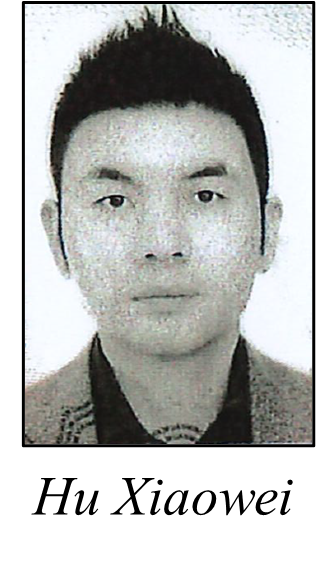
Today’s action targets Hu Xiaowei (Hu), who has been described as Prince Group TCO’s “second-in-command” and as a “big brother” to Prince Group TCO’s leader, Chen Zhi. Hu was previously designated by OFAC in October 2025 under one of his aliases, Chen Xiao’er. He is also known by the names Hu Shi and Wu An Ming. Hu’s activities on behalf of Prince Group TCO reportedly include setting up and supervising certain of the TCO’s subsidiary entities outside of Cambodia; conducting Prince Group TCO-related activities pertaining to aircraft; playing a role in Prince Group TCO-related transnational real estate activities; conducting illicit gambling activities; and owning companies that were ultimately controlled by Prince Group TCO leader Chen Zhi.
Hu controls three companies in the British Virgin Islands: Eagle Fortitude Limited, Leisure Focus Limited, and Future King Inc. (Future King). Through Future King, Hu owns a large network of companies that he uses to manage funds and properties. These companies include two co-located Hong Kong-based asset management firms, China Reserve Securities Limited (China Reserve Securities) and Future Wing Financial Company Limited (Future Wing). Future Wing received millions of dollars of funds that have been assessed to have been derived from cryptocurrency investment scam victims. Future King also owns Singapore-based Future Oasis Pte. Ltd. (Future Oasis) and Hong Kong-based companies Future Cosmos Limited, Future Cosmos One Limited, Future Cosmos Two Limited, CN Crystal Limited, and CN Breeze Limited. OFAC is designating Hu pursuant to E.O. 13581, as amended, for being owned or controlled by, or having acted or purported to act for or on behalf of, directly or indirectly, Prince Group TCO, a person whose property and interests in property are blocked pursuant to E.O. 13581, as amended. OFAC is also designating Eagle Fortitude Limited, Leisure Focus Limited, Future King, China Reserve Securities, Future Wing, Future Oasis, Future Cosmos Limited, Future Cosmos One Limited, Future Cosmos Two Limited, CN Crystal Limited, and CN Breeze Limited pursuant to E.O. 13581, as amended, for being owned or controlled by, or having acted or purported to act for or on behalf of, directly or indirectly, Hu.
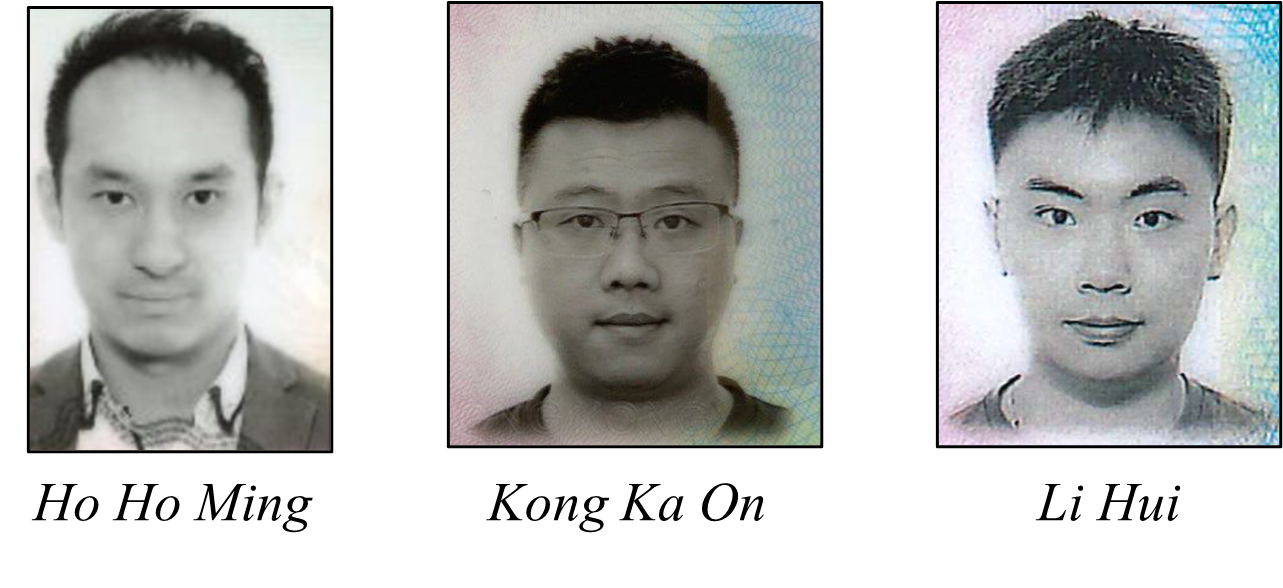
Hu uses a group of Hong Kong-based subordinates to run his web of companies. Several of these individuals have extensive histories as directors or officers in multiple Hu-controlled companies. Ho Ho Ming (Ho), Kong Ka On (Kong), and Li Hui (Li) are some of Hu’s main subordinates. Ho is an officer of China Reserve Securities, Future Wing, and Future Oasis; Kong is an officer of Future Cosmos; and Li is an officer of Future Wing. Kong also controls one Hong Kong-based company — Tycoon Yachts (HK) Limited — and 11 UK-based companies: Rocket Sandbox Ltd, DTX Winners Club Limited, Luffa Technology Network Company Limited, Cuban Trading UK Ltd, Halo Network Technology Ltd, Fortune Network Technology Ltd, Charco Charco Holborn Limited, Terra Cotta Warriors Isle of Dogs Ltd, Mingmen London Ltd, Chasca London Limited, and East Link London Ltd. OFAC is designating Ho, Kong, and Li pursuant to E.O. 13581, as amended, for having materially assisted, sponsored, or provided financial, material, or technological support for, or goods or services to or in support of, Hu. Tycoon Yachts (HK) Limited, Rocket Sandbox Ltd, DTX Winners Club Limited, Luffa Technology Network Company Limited, Cuban Trading UK Ltd, Halo Network Technology Ltd, Fortune Network Technology Ltd, Charco Charco Holborn Limited, Terra Cotta Warriors Isle of Dogs Ltd, Mingmen London Ltd, Chasca London Limited, and East Link London Ltd are being designated pursuant to E.O. 13581, as amended, for being owned or controlled by, or having acted or purported to act for or on behalf of, directly or indirectly, Kong.
Brendon Luo (Luo) and Qiu Weiren (Qiu) were major investors in a Prince Group TCO scam compound used to facilitate fraud operations. Dai An (Dai) is a high-level leader in the Prince Group TCO and has held an official position in Prince Huan Yu Real Estate Cambodia Group Co., Ltd., a company previously designated by OFAC for being owned or controlled by, or having acted or purported to act for or on behalf of, directly or indirectly, Prince Holding Group. Fang Zhizhen (Fang) has been involved with the Prince Group’s online payment gateways for scams and laundered money for the TCO’s scam center proceeds. Chen Bo (Chen) is a director of at least six Prince Group TCO companies that were designated in October 2025 and are owned or controlled by Chen Zhi. Chen is also the majority owner of Hong Kong-based Cloud Nine No. 4 Leasing Company Limited and Cambodia-based CCU Commercial Bank Plc. OFAC is designating Luo, Qiu, Dai, Fang, and Chen pursuant to E.O. 13581, as amended, for being owned or controlled by, or having acted or purported to act for or on behalf of, directly or indirectly, Prince Group TCO. Cloud Nine No. 4 Leasing Company Limited and CCU Commercial Bank PLC are being designated pursuant to E.O. 13581, as amended, for being owned or controlled by, or having acted or purported to act for or on behalf of, directly or indirectly, Chen.

Thailand-based White Horse Hotel Management Group Co., Ltd. is a hotel company controlled by Yang Yanming, an individual designated in October 2025 alongside Hu pursuant to E.O. 13581, as amended, for being owned or controlled by, or having acted or purported to act for or on behalf of, directly or indirectly, Palau-based Grand Legend International Asset Management Co., Ltd, which was concurrently designated for being owned or controlled by, or having acted or purported to act for or on behalf of, directly or indirectly, Chen Zhi. OFAC is designating White Horse Hotel Management Group Co., Ltd. pursuant to E.O. 13581, as amended, for being owned or controlled by, or having acted or purported to act for or on behalf of, directly or indirectly, Yang Yanming.
SANCTIONS IMPLICATIONS
As a result of today’s action, all property and interests in property of the designated persons described above that are in the United States or in the possession or control of U.S. persons are blocked and must be reported to OFAC. In addition, any entities that are owned, directly or indirectly, individually or in the aggregate, 50 percent or more by one or more blocked persons are also blocked. Unless authorized by a general or specific license issued by OFAC, or exempt, OFAC’s regulations generally prohibit all transactions by U.S. persons or within (or transiting) the United States that involve any property or interests in property of designated or otherwise blocked persons.
Violations of U.S. sanctions may result in the imposition of civil or criminal penalties on U.S. and foreign persons. OFAC may impose civil penalties for sanctions violations on a strict liability basis. OFAC’s Economic Sanctions Enforcement Guidelines provide more information regarding OFAC’s enforcement of U.S. economic sanctions. In addition, financial institutions and other persons may risk exposure to sanctions for engaging in certain transactions or activities involving designated or otherwise blocked persons. The prohibitions include the making of any contribution or provision of funds, goods, or services by, to, or for the benefit of any designated or blocked person, or the receipt of any contribution or provision of funds, goods, or services from any such person. Non-U.S. persons are also prohibited from causing or conspiring to cause U.S. persons to wittingly or unwittingly violate U.S. sanctions, as well as engaging in conduct that evades U.S. sanctions. Individuals located in the U.S. or abroad who provide information about sanctions violations to FinCEN’s whistleblower incentive program may be eligible for awards if the information they provide leads to a successful enforcement action that results in monetary penalties exceeding $1,000,000.
The power and integrity of OFAC sanctions derive not only from OFAC’s ability to designate and add persons to the SDN List, but also from its willingness to remove persons from the SDN List consistent with the law. The ultimate goal of sanctions is not to punish, but to bring about a positive change in behavior. For information concerning the process for seeking removal from an OFAC list, including the SDN List, or to submit a request, please refer to OFAC’s guidance on Filing a Petition for Removal from an OFAC List.
Click here for more information on the individuals and entities designated today. To report internet crime to the FBI, click here.
FinCEN’s Notice of Proposed Rulemaking is available here. Written comments on the NPRM may be submitted within 30 days of publication of the NPRM in the Federal Register.